
Winter storms can cause serious, and often hidden, damage to trees. After periods of high winds, heavy rain, and saturated ground, trees that once appeared stable can quickly become hazardous. For Isle of Wight homeowners, this risk is especially relevant following recent severe weather events such as Storm Goretti, which brought strong winds and disruption across the island.
If you have trees in or near your garden, driveway, or property boundary, knowing how to spot the warning signs of a dangerous tree is essential. Early identification can help prevent damage to homes, vehicles, fences, and most importantly, people.
In this guide, our local arborists explain how to spot a dangerous tree after winter storms, what signs to look for, and when it is time to call a professional. This advice is tailored specifically to Isle of Wight conditions, where coastal winds, clay soils, and mature trees increase risk during winter months.
WHY WINTER STORMS INCREASE TREE FAILURE RISK
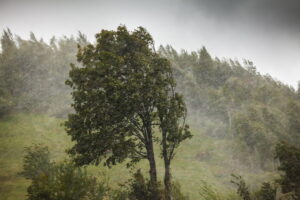
Winter storms place trees under extreme stress. High winds act on bare branches with no leaves to slow airflow, while prolonged rainfall weakens root systems by softening the soil.
On the Isle of Wight, storms like Storm Goretti are particularly damaging due to coastal exposure and gusting winds funnelled through towns such as Cowes, East Cowes, Newport, and Ryde.
Common storm-related stress factors include:
- Waterlogged soil reducing root stability
- Sudden wind gusts snapping weakened limbs
- Existing decay becoming structurally critical
- Leaning trees shifting further after storms
Trees do not always fail immediately. In many cases, damage worsens gradually, making post-storm inspections vital.
WHAT ARE THE MOST OBVIOUS SIGNS OF A DANGEROUS TREE?
Broken or Hanging Branches
One of the clearest indicators of danger is hanging or broken branches. These may be caught in the canopy or resting against other limbs, ready to fall without warning.
Pay close attention if branches are:
- Hanging above paths, driveways, or gardens
- Resting on sheds, fences, or roofs
- Near power lines or neighbouring properties
Even smaller branches can cause serious injury when falling from height.
Deep Cracks in the Trunk or Missing Bark
Cracks running vertically down the trunk are a serious warning sign. These often indicate internal splitting caused by wind pressure or sudden movement.
Also look for:
- Large sections of missing bark
- Fresh splits exposing inner wood
- Bark pulling away near the base
These signs point to structural weakness and potential internal decay.
Leaning Trees After Storms
A tree that suddenly leans after a storm should never be ignored. A noticeable change in angle often means root failure has begun.
Key warning signs include:
- Soil lifting around the base
- New gaps appearing between soil and roots
- A lean that worsens over time
Leaning trees are especially dangerous near homes or public access areas.
What Root Damage Looks Like After Heavy Rain
Root damage is one of the most dangerous and least visible storm effects.
After prolonged rainfall, common on the Isle of Wight in winter, trees can lose their anchoring strength. Signs include:
- Exposed roots that were previously buried
- Soft or cracked ground around the base
- Roots visibly lifted or torn
Trees growing in clay or compacted soils, common in parts of Newport and East Cowes, are particularly vulnerable.
SIGNS OF DECAY & LONG TERM STRESS
Fungal Growth on Trunks or Roots
The presence of fungi is one of the clearest signs of internal decay.
Look for:
- Mushrooms at the base of the tree
- Fungal brackets on the trunk
- Soft or spongy wood
These indicate that the tree’s internal structure may already be compromised.
Wood Dust or Small Holes
Fine wood dust around the base or holes in the trunk may signal wood-boring insects.
While not always immediately dangerous, insect damage weakens wood fibres and increases storm failure risk.
Excessive New Growth at the Base
Unusual shoots growing from the base or trunk, known as epicormic growth, often appear when a tree is stressed or declining.
This is a survival response and should prompt a professional assessment.
STRUCTURAL WEAK POINTS THAT BECOME CLEAR IN WINTER
Tight V-Shaped Branch Junctions
Winter is the best time to spot weak tree structure because leaves no longer hide branch connections.
Tight V-shaped junctions are a major risk factor. These occur when two branches grow closely together, trapping bark between them and creating a weak join.
Under storm pressure, these joints are prone to splitting.
Co-Dominant Stems
Trees with co-dominant stems, where two or more main trunks grow from the same point, often fail during storms.
Problems include:
- Included bark weakening the join
- Uneven weight distribution
- Higher likelihood of trunk separation
Professional pruning or reduction is often required to manage this safely.
Heavy or Unbalanced Crowns
Overgrown canopies act like sails in high winds.
Signs of a dangerous crown include:
- Dense growth on one side
- Long, extended limbs with no reduction
- Previous poor pruning leaving weak regrowth
Crown reduction can significantly lower wind resistance and failure risk.
WHAT TO DO IF YOU SPOT A DANGEROUS TREE
Prioritise Safety
Never attempt to cut or remove storm-damaged trees yourself.
Avoid:
- Standing beneath damaged branches
- Using ladders near unstable trees
- Attempting chainsaw work without training
Even small shifts can cause sudden collapse.
Call Our Qualified Local Arborist on The Isle of Wight
If you notice any of the warning signs above, it is time to contact a professional.
A qualified arborist can:
- Carry out a full risk assessment
- Identify hidden internal damage
- Recommend pruning, reduction, or removal
- Assist with Tree Preservation Orders if applicable
You can learn more about professional assessments on our Tree Inspections page.
HOW PENNY TREE SURGERY & LANDSCAPING CAN HELP
As a locally based team, we provide:
- Emergency tree surgery
- Post-storm safety inspections
- Tree removal and dismantling
- Crown reduction and pruning
- Licensed waste removal
Our services are tailored for Isle of Wight homes and gardens, with fast response times following severe weather.
WHEN SHOULD YOU ACT IMMEDIATELY?
You should seek urgent help if:
- A tree is leaning towards a building
- Large branches are hanging overhead
- Roots have visibly lifted
- A tree has cracked following a storm
Delaying action can increase risk and repair costs.
GET EXPERT ADVICE AFTER WINTER STORMS
If you are unsure whether a tree on your property is safe after recent storms, professional advice can give peace of mind and prevent serious damage.
Our team offers free site visits across Cowes, East Cowes, Newport, Ryde, and the wider Isle of Wight.
Contact us today to arrange an inspection.
Call us: 01983 214087 or 07365 825554
Email: Bruce@pennytreesurgery.co.uk
Address: 64 Nelson Dr, Cowes PO31 8QY